Fold · Resist · Reveal
Discover the Japanese art of shibori, a centuries-old textile tradition that transforms fabric through folding, binding and resist techniques.
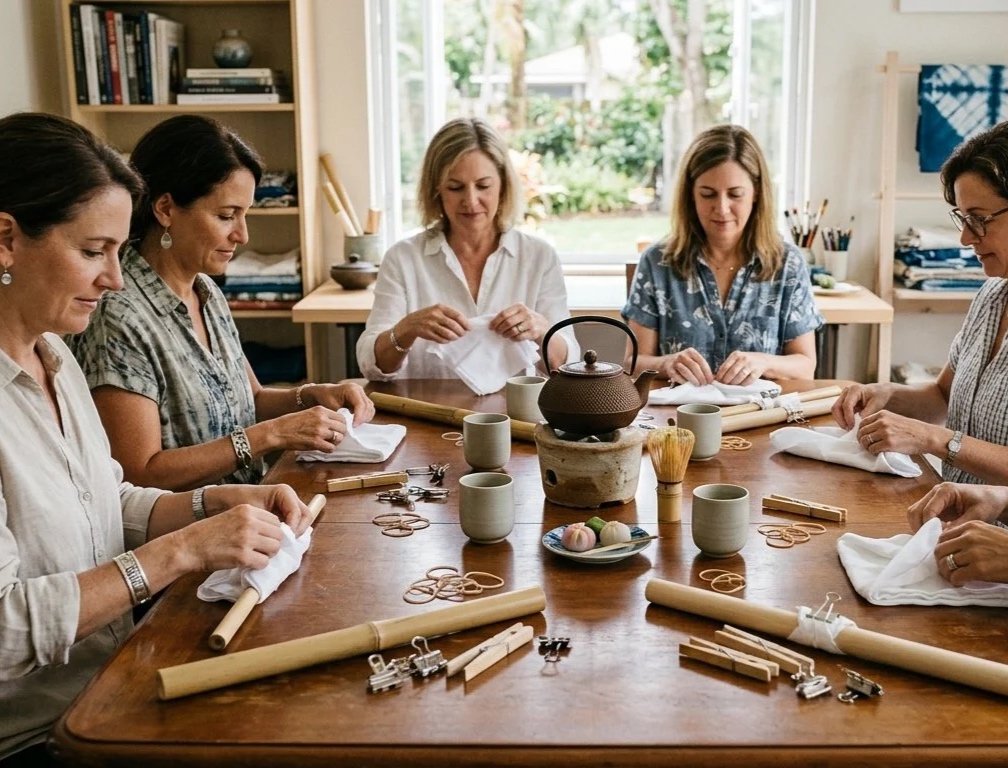
Participants begin by exploring the history and traditions of shibori before experimenting with several simple resist methods. Fabric is folded, wrapped, bound or clamped to create areas where the indigo dye cannot penetrate. Each choice produces a different pattern—and part of the magic is waiting to see what happens.
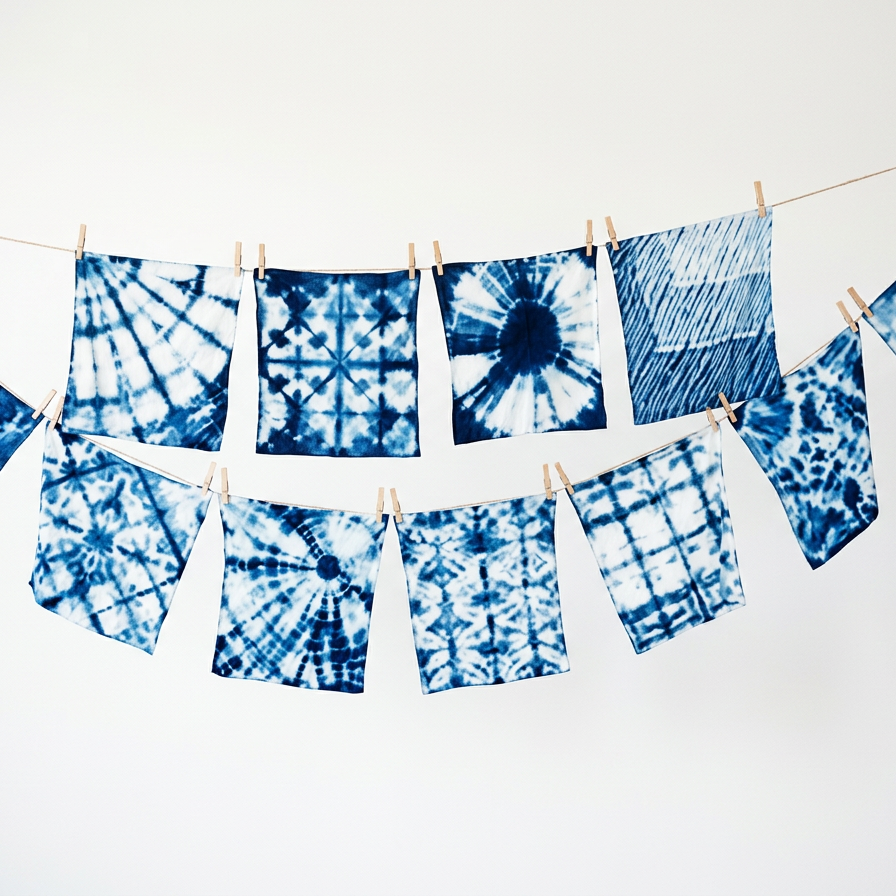
The prepared textiles are immersed in a rich indigo dye bath, where the fabric emerges a beautiful greenish-yellow before gradually oxidizing into deep blue. Once the bindings and folds are removed, the pattern is revealed.
The result is an original indigo textile shaped by both intention and chance. No two pieces are ever exactly alike.
Create Your Own Indigo Textile
Participants will explore a selection of traditional shibori techniques, including folding, binding and clamp-resist methods, before creating their own design.
A curated selection of resist materials allows participants to experiment with geometric patterns, organic forms and variations in color and intensity.
The final reveal—unfolding the fabric to discover the pattern within—is one of the most rewarding parts of the experience.
SHIBORI INDIGO
What's Included
All fabric and dye materials
A curated selection of shibori resist materials
Instruction in traditional shibori techniques
Introduction to the history and traditions of Japanese shibori
Hands-on guidance throughout the dyeing process
Indigo dye bath and finishing process
Charcuterie board
Sparkling water, tea and other non-alcoholic beverages
All setup and cleanup
A beautiful, relaxed creative experience designed for beginners
Experience Details
Duration: 2½–3 hours
Ideal group size: 8–12 participants
Experience level: Beginner-friendly
Finished piece: Indigo scarf (15” × 6”) OR 4 dinner napkins
What We Need From Your Community
2–3 tables
Seating for participants
Access to a sink with running water
A comfortable, well-ventilated workspace
Access to electricity
A designated area for rinsing and drying textiles